Commissions ouvertes
Guide artisanat - Comment améliorer son costume ?
Sublimez vos costumes fantasy avec des conseils créatifs pour des détails narratifs et une cohérence visuelle parfaite. Apprenez comment faire vivre votre costume de sa création à son utilisation pour qu'il survive à toutes vos aventures épiques. Faites le choix de l'artisanat.
Castiane Lefeuvre
5/31/20256 min read
In the world of live-action role-playing, costume balls, and medieval fantasy festivals, a good costume is about more than just looking good. It is an extension of your character, a visual language that conveys their origins, intentions, and experiences. Every fold, every fabric, every detail contributes to creating a credible, memorable, and above all, immersive silhouette.
But how do you go from a “good costume” to a costume that tells a story, catches the eye, and invites play? Whether you're looking for realism, elegance, or expressiveness, this article will guide you step by step to enrich your outfit and anchor your character in a coherent, lively, and profound universe. Because after all, when appearance becomes storytelling, the gaming experience is transformed.
1. Start by working on the overall consistency of your character
There are several approaches to designing a costume that is consistent with your character. The most common approach is to first imagine a character with their personality, background, and role in the world, then create an outfit that reflects that identity. But the reverse is just as valid: start with a strong aesthetic desire—a silhouette, a color, a material that speaks to you—and then build a figure around it that gives meaning to that garment.
But then, how can you ensure the final consistency? It starts with real research and comparison. Immerse yourself in materials, cuts, and cultures. For example, do you prefer the raw, textured look of linen or hemp, or a softer, more uniform cotton? Weaves can radically change the appearance of a fabric, and thus influence the perception of the role it embodies. A ranger, a blacksmith, a healer, a court mage... each will have a clothing texture that tells the story of their place in the world.
Don't limit yourself to fabrics. Draw inspiration from illustrations, artwork, video games, movies, etc. Observe the silhouettes that appeal to you: volumes, proportions, fluidity. These are elements that contribute as much to a character's identity as their name or story.
But don't forget that this is unique to you. In meetings, I often ask this essential question: “What, for you, makes this costume [insert the desired adjective: noble, mystical, wild, etc.]?” Because our imaginations are different. What you associate with a culture or archetype will not be perceived in the same way by another person.
2. Add accessories that tell a story
Accessories aren't just decorative additions. They're powerful narrative elements that anchor a character in their daily life and reinforce the realism of their world. In real life, we are surrounded by personal items that say a lot about us: an inherited ring, a watch rendered useless by our phone, a favorite key ring. The same logic applies to costumes.
Every accessory you add can tell a story. A patched leather purse, a notebook tied around the waist, a talisman sewn into the lining, a strange vial, a worn map, a key without a lock... All these elements, especially if they seem to have a history, will captivate attention and spark conversation. The key is to stay true to the tone of the universe: even an artifact of noble lineage must appear to have stood the test of time and lived through adventures.
There are several options for these accessories: hunt for them at flea markets and garage sales, browse the stalls of a medieval market, or order a unique creation from a craftsman or craftswoman. You'll find unique items to use or repurpose, or you can turn to artisans who put their heart and soul into creating high-quality handmade pieces. Their visual style can make all the difference.
Above all, give each object a story. Even if it's made up on the spot, an explanation brings the accessory to life.3. Travaillez les textures et la richesse des matières
3. Work on textures and the richness of materials
A good suit isn't just visually consistent: it must also “speak” to the eye, even in its simplicity. And for that, nothing beats texture. A monochrome outfit can be incredibly rich... if you know how to play with contrasting materials.
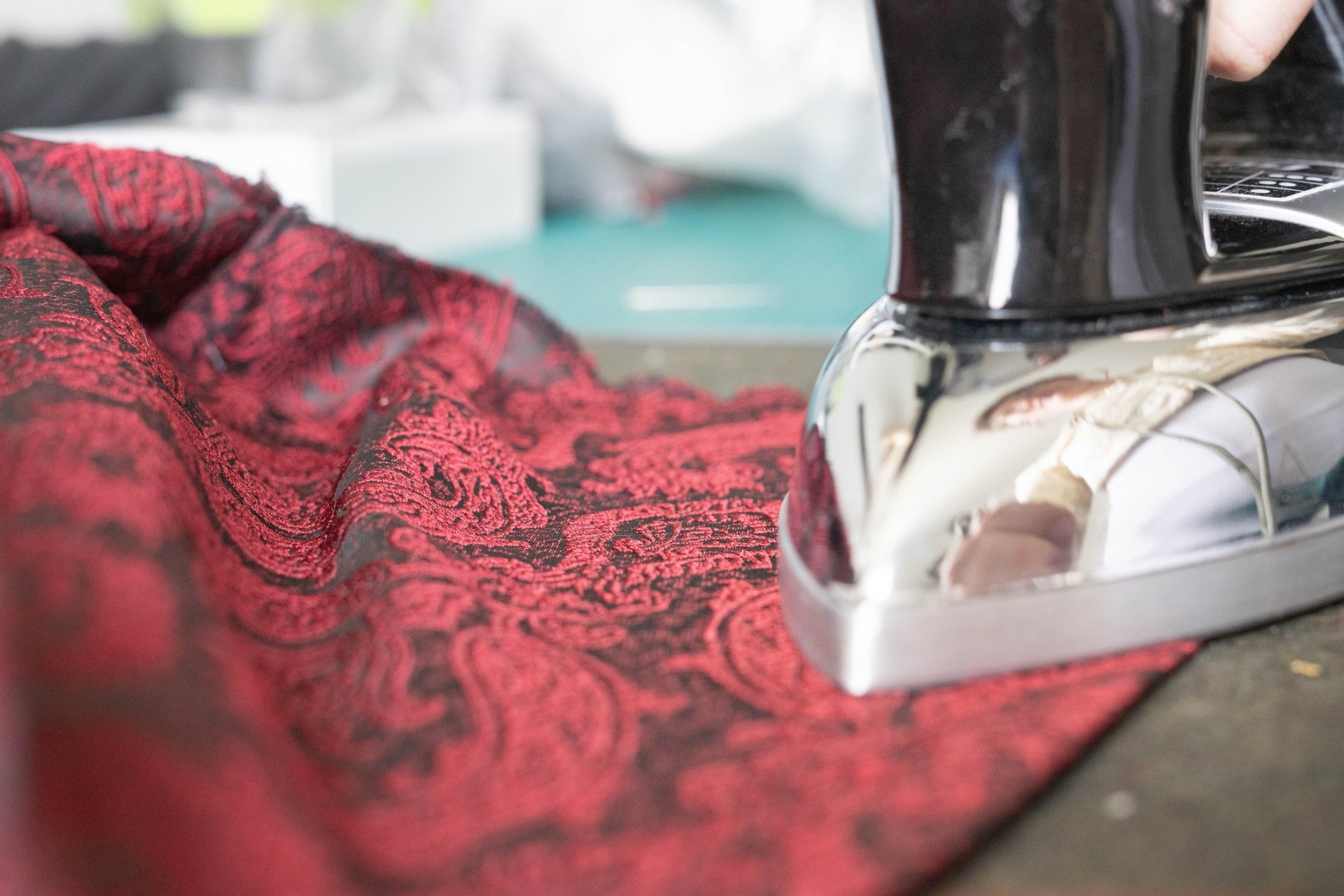
Combining a textured fabric with a very smooth canvas, or juxtaposing two fabrics of similar colors but radically different weaves, creates a very interesting visual depth. This avoids the “flat” or “costume” effect, adding subtle relief that catches the eye without overloading it.
Texture is also a question of authenticity. In a medieval or fantasy world, very smooth or synthetic fabrics clash with the expected aesthetic. Opt for natural materials, even if they are slightly irregular, as they add an immediate touch of realism.
4. Pay attention to all the visible details: seams, finishes, embroidery, braiding
Details make all the difference. They are what transform a decent outfit into a captivating piece. Whether you choose a damaged, tattered costume or, on the contrary, a noble and neat outfit, every detail must be carefully considered. A “dirty” garment must be just right; a frayed hem can be worked on. And a dignitary's costume deserves perfect seams, neat topstitching, and harmonious edging.
Braiding can radically transform a silhouette: thicker or thinner, with geometric or floral patterns, discreet or flashy, it structures and emphasizes. Embroidery, meanwhile, is the perfect opportunity to add symbolism. What does this pattern represent? Is it membership of a house, a memory of initiation, a wish?
Take the time to think about what each detail says. Because these are the elements that others will see up close... and that photographers will come to capture.
5. Value craftsmanship and unique pieces
In a world saturated with industrial products, choosing a handmade, artisanal piece is a powerful act. It immediately gives your outfit soul. You are supporting the work of a local designer, but above all, you are treating yourself to an accessory or garment that is unlike any other.
Each artisan has their own style, approach to materials, shapes, and finishes. Whether you choose a purse, cape, headdress, or bag, it will add richness and authenticity to your costume. And if you're on a tight budget, invest in one or two statement pieces first: a striking accessory, an intricately woven fabric, a unique piece of jewelry. These items will become the cornerstones of your character.
Craftsmanship also guarantees high-quality workmanship and welcome durability.
6. Think about the costume's lifespan: comfort and functionality first
A costume isn't just an aesthetic showcase: it's a garment that you're going to wear, often for several hours or even several days, in sometimes turbulent conditions. And that changes everything. A LARP in the rain, a ball, an overheated convention... you need to be able to move, breathe, and feel free.
This means making practical choices. For example, if you're playing a thief, a secret pocket sewn into your cape can be both useful in the game and immersive. If you're wearing a long train, make sure it can be lifted or detached. Capes, belts, and bags should stay in place without getting in the way.
Comfort is an often overlooked factor, but it is vital to your enjoyment of the experience. A beautiful but uncomfortable costume can quickly become a burden. Conversely, an outfit that is comfortable to wear will become an extension of yourself, one that you will enjoy wearing on every occasion.
7. Bring your costume to life and let it evolve over time
A costume is not static: like your character, it evolves. It can be enriched with items earned during events, found objects, or decorations earned or stolen. This is what makes it alive and believable. A brooch to signify a change in status, an extra stripe to represent a promotion, a damaged piece that bears witness to a battle or a perilous journey...
This evolution can be very subtle, but it will speak to those who play with you. And it will become a treasure trove of stories to tell: “This bracelet is a souvenir of the northern rebellion...” or “Since she betrayed me, I no longer wear her color.”
Developing your costume means cultivating the character's memory. And it's a real creative pleasure. Keep photos, make sketches, follow this transformation as events unfold: you'll see how much it enriches your immersion.
8. A distinctive detail
How many times have you wanted to describe someone who had no distinguishing features? Of course, if your goal is to go unnoticed, then do NOT follow this point!
Being recognizable does not necessarily mean wearing a grandiose costume, but rather having a striking detail. A detail in the hair or a strong feature in the costume. Choose something that no one else has.
Improving your costume isn't just a matter of aesthetics: it's an act of storytelling, commitment, and enjoyment. It's giving shape to an idea, making a character tangible, and offering other players visual cues to better interact with you. Every button sewn on, every braid chosen, every sign of wear tells a part of the story.
So take your time, make the right choices, and let yourself be inspired by craftsmanship, materials, and your own desires. Above all, keep in mind that a good costume is never “finished”: it evolves, it enriches itself, it grows... just like the adventure you are experiencing.
It's up to you to weave your legend.
Contact
Near Paris, France
Phone : +33 1 87 37 42 16
email : castiane@lesmainsacoudre.fr
Socials
2025 © Les Mains à Coudre. Tous droits réservés.